Sunday, June 8, 2014

Fantasy, 1940s Style: Part I

When we think of Hollywood in the 1940s, we think of a decade dominated by the war. From 1941 to 1945, war films were being made regularly, and even comedies, romances, period pieces and westerns used the war as a backdrop to varying degrees.

What we often don’t think of today are the number of fine fantasy films made in that decade, during and after the war. Certainly special effects have always been a part of fantasy filmmaking, but what differentiates ‘40s fantasies from the big-budget, special effects-laden fantasy films of the last 30 years is subtlety.

Compared with the CGI of today, 1940s special effects seem quaint, if not crude, but technical wizardry was never the focus. Perhaps because of the technical limitations, it's always the basic storyline, and especially the characters, that take center stage. The films I’ve selected here aren’t scary ghost stories; they blend a fundamentally romantic spirit (no pun intended) with existential themes in both light-hearted and serious fashion.


Here Comes Mr. Jordan (1941)


Robert Montgomery, as the
saxophone-playing boxer Joe Pendleton
I mentioned WWII, but this film was released in August of 1941, before the United States entered the war after the bombing of Pearl Harbor. So it has more in common with the feel of the late 1930s than it does with the ensuing decade. All that is really immaterial, as we have a film rooted in its era but somehow transcendent.

Boxer Joe Pendleton (a wonderful Robert Montgomery) dies in a plane crash and finds himself among the billowy clouds of heaven. Here he meets Mr. Jordan (Claude Rains), a sort of guardian angel who realizes Joe has mistakenly died 50 years ahead of his true destiny. His actual body has already been cremated, so Mr. Jordan acts to correct the situation by placing Joe’s spirit in the body of Bruce Farnsworth, a millionaire who has just been murdered by his wife and her lover.

Apparently Farnsworth was not a very sympathetic man in life, and Joe’s jovial, unpretentious personality confuses those who knew Farnsworth, including Bette Logan, whose father Farnsworth was trying to bankrupt. Through the course of the story, Bette falls for Joe/Bruce, while Joe/Bruce convinces Max Corkle, Joe’s former trainer, that the boxer Max knew and loved truly has been reincarnated as the despised millionaire. (The scenes in which this occurs are brilliantly played by the wonderful character actor James Gleason.)

Robert Montgomery, who usually plays debonair characters, is marvelous as Joe, a real diamond in the rough. Claude Rains, who could do no wrong as one of the finest character actors of his time, is witty, urbane, and empathetic as Mr. Jordan. And the supporting cast, including the perpetually flustered Edward Everett Horton as the spirit who caused Joe’s heavenly problem in the first place; sweet Evelyn Keyes as Bette; and Rita Johnson as the nefarious Julie Farnsworth, are all good.

The film has no special effects, as everything is implied—it’s all about the actors’ acting and reacting. What’s magical about it is how moving it becomes as it builds to its climax; Joe gets more than a second chance at life, something he wasn’t willing to give up so quickly in the first place. The conclusion between Joe and Bette is sweet and satisfying.

“Here Comes Mr. Jordan” is gorgeously filmed and a true classic that represents the best that Hollywood could produce at that time. It was remade in 1978 with Warren Beatty as “Heaven Can Wait,” not to be confused with a movie from 1943 with the same title, which is also featured in this post. (Side note: For fans of the '60s sitcom "Bewitched," Robert Montgomery is the father of its star, the fabulous Elizabeth Montgomery. Which brings us to our next film...)

I Married a Witch (1942)

"Love is stronger than witchcraft."
- Veronica Lake as Jennifer
Veronica Lake is an iconic figure of 1940s Hollywood. Her career flamed out as quickly as it began, but in 1942, she was at the top of her game with “I Married a Witch.” She is perfectly cast as Jennifer, an enchantress in colonial Salem who, along with her warlock father Daniel (Cecil Kellaway), are burned at the stake by Jonathan Wooley (Fredric March), a Puritan who then buries their ashes under a tree.

Jennifer curses Wooley and all his male descendants, dictating that they will always marry overbearing, domineering women. In a series of comic vignettes, we see how her curse affects generation after generation of Wooley men.

Which leads us to the modern day. Wallace Wooley (March again) is running for governor and engaged to marry the spoiled and bitchy (looks like the curse is working) Estelle Masterson, whose father is Wallace’s chief political backer.

During a storm, lightning splits the tree where Jennifer and Daniel have been stuck for centuries. They escape as plumes of smoke, and seek out Wallace to continue their mayhem. In order for Daniel to incarnate Jennifer as a human, he needs fire, so he burns down a hotel. As Wallace passes by the burning building, he heroically rescues Jennifer, who poses as a helpless damsel in distress.

She tries to seduce him with a love potion, but this is where her plan goes awry: She accidentally drinks the potion herself, and ends up falling in love with Wallace. Now she's busy chasing after him while trying to keep her vengeful father from carrying through with their initial plans. Complications ensue, as Wallace’s pending marriage to Estelle and his race for the governorship are put in repeated jeopardy. The contrived plot is handled cleverly by director Rene Clair, who makes the movie a lot of fun to watch. This time there are plenty of special effects of the “objects moving on their own” variety, but they’re always there to advance the plot, and the effects are actually quite fun to see even today.

Veronica Lake is delightful and sexy as the witch, her famous peak-a-boo hairdo lending itself deliciously to her character. Frederic March is paired well with her, carrying off the physical comedy quite well. (He was one of those versatile actors of his generation who could do just about anything.)

Cecil Kellaway makes the most lovable warlock in film history, consistently flubbing every attempt to wreak havoc due to his habit of converting to smoke and hiding in a bottle of booze (thus getting drunk). This was an early role for Susan Hayward as Estelle, who would go on to dominate Hollywood in the ‘50s as one of the most bankable stars. Humorist Robert Benchley, who enlivens any film he is in with his brand of dry, wry humor, has some great moments as Wallace’s friend Dr. Dudley White.

The very witty screenplay is based on the novel “The Passionate Witch” by Thorne Smith, who also wrote a number of other humorous fantasies that were made into films, including the famous “Topper” (about two sophisticated ghosts who help an old friend ultimately find happiness) and justly less well-known “Turnabout” (about a man and woman who switch bodies to see how the other half lives).

Rene Clair also directed a couple other notable film fantasies, including 1944's “It Happened Tomorrow” (featured later in this post), as well as the 1935 comedy, “The Ghost Goes West .” (Note: I am almost positive that “I Married a Witch” was the inspiration for the sitcom “Bewitched,” which I mentioned in the synopsis above about “Here Comes Mr. Jordan.”)

Heaven Can Wait (1943)
I referred to the 1978 remake of “Here Comes Mr. Jordan” above, called "Heaven Can Wait," but the 1943 “Heaven Can Wait” is a different story entirely. The film opens with Henry Van Cleve (Don Ameche) as an old man, who has just died and is arriving in Hell to review his misspent life. He meets a very elegant Satan (the deliciously venal Laird Cregar), who will judge whether he was bad enough to gain entry.

The bulk of the movie concentrates on how Henry evolves into a philanderer from a very early age. The film looks at his life at different stages, beginning at age 10 when he meets his pretty governess; to age 25, when he meets his future wife Martha (Gene Tierney); to his tumultuous 25-year marriage; and on to middle and old age, with Henry getting into one ill-advised dalliance after another.

Directed by Ernst Lubitsch, who was a master of sly, elegant comedy, the film is not laugh-out-loud funny, but does deliver a light story underscored by the heavy question of “What is life for?” The fantasy element of the film is really in the opening and closing of the film, with Henry’s interactions with Satan as his life is assessed. Was he really bad enough to go to hell? Or is his soul destined for "the other place"?


Ameche, who is a star we don’t hear much about these days, is perfectly cast as a charming rogue who eventually proves his unsuitability for hell. Gene Tierney, who appears later in the decade in another fantasy film discussed in this blog post, always lent an air of ethereal elegance to any film in which she appeared.

The supporting cast includes old pros like Charles Coburn as Henry’s irascible grandfather; Louis Calhern and Spring Byington as his clueless parents; and Marjorie Main and Eugene Pallette as Martha’s feuding parents. All of them have a chance to comically shine, but Pallette has perhaps the funniest scene opposite Main as they share a rather unpleasant breakfast.

A Guy Named Joe (1943)

"Either I'm dead or I'm crazy." So says Pete Sandidge, standing among billowing clouds after crashing his B-25 bomber. It doesn’t take long to realize he isn’t crazy.

In this wartime fantasy, Pete (Spencer Tracy) is a pilot who is sent back to earth to pass on his wisdom to another, younger, pilot, Ted Randall (Van Johnson). Pete’s unseen spirit guides Ted, and he watches with some dismay as Ted falls in love with Pete's old flame Dorinda Dunston (Irene Dunne), a Women Airforce Service Pilot who is still grieving Pete’s death.

The film hinges on Tracy’s characterization of Pete, a tough but appealling man’s man. In life, his relationship with Dorinda was tender, which makes his jealousy as he watches her and Ted’s relationship develop touching as well as funny. Their chemistry is terrific, which is fascinating since Tracy and Dunne didn't like each other in the least in real life. (I guess that's a testament to good acting.) The scene in front of a fireplace is a case of great natural acting, and it gives Dunne a chance to demonstrate her character's plucky personality. She's a feminine woman, but she's a spunky pilot completely at home among all these guys.


In an implausible conclusion, Dorinda begs Ted not to take on a mission to bomb the largest Japanese ammunition store in the Pacific. She opts to fly for Ted to keep him out of harm's way, and Pete’s ghost helps her execute the mission. The final scene of Pete realizing his earthbound assignment is finished, and coming to terms with the fact that he is dead, is sweet and moving. It’s a film firmly rooted in wartime, but the “guardian angel” storyline is timeless.

In addition to some excellent aerial special effects, mixing miniatures and actual aerial photography, “A Guy Named Joe” also features some grade-A supporting actors. These include Lionel Barrymore (Drew's great-uncle) as the celestial “General” who gives the ghostly Pete his earthly assignment; Ward Bond, who lights up every seen he's in as Pete’s best friend Al; and James Gleason (again) as the rather unsympathetic commanding officer “Nails” Kilpatrick. Swimming-turned-movie star Esther Williams also has a small role, which kicked off her successful career in films at MGM.


I think the point of this morale-boosting film is summed up in a frank conversation between the spirits of Barrymore and Tracy, when the General tells Pete: "No man is really dead unless he breaks faith with the future; no man is really alive unless he accepts his responsibility to it. That’s the chance we are giving you here; the opportunity to pay off to the future what you owe for having been part of the past. It’s another way of saying, I’m glad I lived; I’m glad I was alive.”

Side note: Steven Spielberg is a long-time fan of this film, and he remade the basic story as “Always” in 1989, changing the setting from WWII to aerial firefighters. On a fun related note, “A Guy Named Joe” is playing on a television in the background in the decidedly more frightening ghost story “Poltergeist,” which Spielberg produced (but may as well have also directed) in 1982.

It Happened Tomorrow (1944)


Dick Powell and Linda Darnell
Larry Stevens (Dick Powell) is a newspaper reporter in the early 1900s who wishes he could see the news a day before it actually happens. His old friend Pop Benson gives him a copy of a newspaper, which Larry stuffs into his jacket and forgets.

That evening, Larry discovers that the newspaper Pop gave him has printed tomorrow’s news; and it continues to do so with each subsequent day. Larry uses this advantage to get the scoop on his competitors, but also finds he can get rich at the racetrack by betting on winning horses.

But his ability ends up bringing about more problems than he anticipates, especially as he learns about a hold-up before it happens, which makes him the main suspect. When Larry sees the news of his own death, he finally realizes this visionary ability has gone too far.

This all sounds very serious, and the film does exhibit enough drama to make the story engaging, but under the helm of French film Rene Clair (who also directed “I Married a Witch” a couple years before), the film has a light touch, and setting it during the turn of the 20th century gives it a charming quaintness. It's a nice take on the idea of "careful what you wish for" theme.

Dick Powell, who has been featured on In a Movie Place in my earlier post on film noir, is always a solid leading man, capable of heavy drama or light comedy. Anyone would agree that Linda Darnell, as Larry's girlfriend Sylvia, niece of the phony clairvoyant, was one of the era’s most beautiful actresses. And with old comic veterans Jack Oakie (as Sylvia’s clairvoyant uncle); Edgar Kennedy (as Inspector Mulrooney, the cop who’s after Larry); and the always hilarious Edward Brophy as one of Larry’s fellow newspapermen, this fantastic story requires no special effects, but rather tells its tale with finesse and style and a good deal of humor.

I am guessing that this film was the inspiration for the late ‘90s hit TV show “Early Edition,” which starred Kyle Chandler as a man who mysteriously gets the daily news one day before publication, and how he uses that knowledge to help curtail various disasters.


In Part 2 of this installment, we'll look at four more movies, all made after the war, that continue our look at fantasy in the films of the 1940s.

Monday, May 12, 2014

Get to Know Katharine Hepburn

No movie star’s personal and professional life seem to mirror each other as much as Katharine Hepburn’s. From her first film in 1932 to her last appearances in 1994, whether it was coincidental or calculation, her movies seem to track the real Hepburn.

For most of her life, she eschewed the public eye. She didn’t do publicity tours, rarely gave interviews, and attended just a single Oscar telecast, in 1974. This most private of actresses preferred to let her films do the talking.

Despite studio-engineered magazine articles during her heyday of the '30s and '40s, or the occasional piece in popular magazines as late as the '60s, Hepburn didn't really begin regularly doing interviews for television and magazines until the early 1980s, likely due to the huge reception she got from "On Golden Pond" opposite Henry (and Jane) Fonda in 1981. I think she was trying to solidify her legacy, as well as the legacy of longtime companion Spencer Tracy, a 25-year relationship she had not, up to that point, spoken openly about. In fact, she took the narrative into her own hands and eventually wrote two books about her life and career, including an autobiography.

As a long-time fan (disclaimer: she’s my all-time favorite actress), it’s occurred to me how similar her life story is to her films. I don’t think this is accidental, as Hepburn had extraordinary control in choosing the films in which she appeared. (Very much a rarity during the big studio era.) So I think it’s safe to say she consciously chose roles that echoed her own personal values and beliefs about being a woman, an American, and a human being, as well as her approach to life and work. So many of her characters have in common a willfulness, spunk, creativity and joy in living that are very Hepburn.

I’ve selected titles from the early 1930s to the mid-1950s, when she was working regularly, which I feel provide distinct windows into the real Katharine Hepburn. These titles indicate the type of woman she was when the films were made. Watching them, I think, helps you get to know Kate as she grows up from a young lady to a mature middle-aged woman.

Morning Glory (1933)
When she hit the Hollywood scene in 1932, Kate made a big impact; there had been no one like her, and audiences were captivated. She was cast as refined yet quirky, independent-minded young women. In “Morning Glory,” she plays Eva Lovelace, a naïve, stage struck girl who is determined to become a famous actress. Louis Easton (Adolphe Menjou) is a big-time theatrical producer who is doubtful of Eva’s viability as a star; Joseph Sheridan (the very young and immensely attractive Douglas Fairbanks, Jr.) is the writer who falls for Eva.

The film is a bit creaky, but it moves fast, and Kate is wonderful to watch. (The role won her the Best Actress Oscar.) At this time, audiences were still enjoying Kate’s atypical persona; but her sharp edges and sometimes arch manner would wear itself thin within five years. (We’ll get to that in a moment.) Knowing about Kate’s real-life theatrical aspirations prior to coming to Hollywood, it’s easy to feel while watching “Morning Glory” that Kate is Eva, Eva is Kate. And you can trace her role here to our next film, “Stage Door,” in which she again plays an aspiring actress.

Stage Door (1937)
By the time Kate made “Stage Door,” she’d been in Hollywood for five years. Her first three films had been hits, with an Oscar win for “Morning Glory.” But by 1934, it was flop after flop. Audiences were growing tired of her twee characterizations in a series of rather dull costume dramas. RKO Studios took a chance by casting her in a modern role as Terry Randall, a wealthy young woman who wants to be a stage actress. (Sort of a more sophisticated version of Eva Lovelace in "Morning Glory.")

To get the feel of the theatrical life, Terry takes a room at The Footlights Club, a boarding house for struggling actresses. She is immediately a fish out of water, as these girls are hard-bitten, sarcastic, and jaded. But what a bunch of girls! Such up-and-comers as Eve Arden, Lucille Ball, Ann Miller, and a house full of others, have a chance to shine, with terrific one-liners and funny situations in the house. Kate’s top-billed co-star is Ginger Rogers, as Terry’s roommate Jean Maitland, and she is hilarious; they have great chemistry (even though their characters don’t like each other in the beginning, and apparently weren’t great fans of each other in real life.) Adolphe Menjou appears again as, you guessed it, a theatrical producer who puts some jealousies into action.

The character of Terry Randall mimics Kate’s own story: She comes from a rich family and, against her family’s wishes, decides to try the stage. In real life, Kate appeared in a play that was a tremendous flop. In "Stage Door," her Terry initially demonstrates a lot of arrogance but little talent in a seemingly doomed play. Through circumstances of “Stage Door,” the opposite happens and the play is a hit. Watch the film for yourself to see how this all plays out...

The film fortifies Kate as a modern woman, and she gets to be droll as well as moving. Her Terry Randall strongly encompasses what we know about Katharine Hepburn today: Haughty, confident, headstrong. It's not a great performance, but there is something bracing to her work here.

The Philadelphia Story (1940)
By 1939, Kate had suffered more film flops than hits, and was deemed “box office poison,” meaning film distributors didn’t want to book her movies because they weren’t making money. She fled to Broadway, where she had a great triumph with Philip Barry’s play “The Philadelphia Story.” In the smartest move of her career, she bought the rights, sold it to MGM, and reinvented herself in a smash hit movie that put her squarely back on top. She plays Tracy Lord, a very high-minded blue blood whose disdain for personal weakness, and harsh judgment for those who don’t measure up to her standards, has resulted in a fairly recent divorce from C.K. Dexter Haven (the dazzling Cary Grant).

Now she’s ready to marry the social-climbing George Kittredge (John Howard), who—to Tracy’s horror—invites Spy magazine to cover the wedding. The tabloid’s reporter, Mike Connor (James Stewart) descends with his photographer cohort Liz Imbrie (Ruth Hussey) on the Lord mansion. Tracy initially disdains Mike and Liz for meddling in her private life, and strings them along for her amusement. However, on the night before her wedding, in a champagne haze, she falls for Mike. Yet on her wedding day, she realizes she still loves Dexter. Fast-paced complications ensue.

This film cemented Kate’s image as a woman of convictions and a very strong sense of herself, her values, and her principles. She also looks more gorgeous than she ever did before (or, in my opinion, after). The tony sets, beautiful people (Cary Grant = dazzling), and lush black-and-white cinematography make the movie positively shimmer. And at its core are subtle notes on class, celebrity, and privacy, quite pertinent in the age of the Kardashians.

Woman of the Year (1942)
Kate plays strong and independent yet again as Tess Harding, a very successful political reporter who meets sports reporter Sam Craig. He isn’t used to this kind of woman, but he falls for her anyway. It’s so much fun to watch their relationship unfold due to their fantastic on-screen chemistry, which extended off-screen as well; Tracy and Hepburn spent the next 25 years in a (very complicated) real-life romance.

But in “Woman of the Year,” they are in the prime of their lives, and they play their roles with aplomb and great humor. Kate is quite sexy, and her characterization of Tess is irresistible. Tracy, as Sam, is adorably gruff. The film is the classic opposites-attract story, and it has an airy, leisurely quality. It was such a success, in fact, that Tracy and Hepburn teamed eight more times until his death in 1967. All the character traits we admire about them both, as a team and individually, are on display in this film. And again, she looks fabulous. (Check her out in that velvet smoking jacket!)

Adam's Rib (1949)
It’s 1949 and it’s as if Sam and Tess have settled into married life. In “Adam’s Rib,” Tracy and Hepburn play Adam and Amanda Bonner, lawyers who suddenly find themselves on the opposite side of the same case, a charge against a woman (Judy Holiday) who shot, but didn't kill, her philandering husband. Amanda argues that the so-called attempted murder was justified to keep her family together; Adam argues that the wife should be thrown in prison. The film offers some delicious interplay between the warring couple, and ventures some of the earliest overtones of feminism and arguments for equality of the sexes outside of an early '30s pre-code movie. Leave it to Kate Hepburn to be the movie star who broaches these subjects in 1949.

Hepburn was 42 when the film was made, and she comes across as a softer version of her earlier movie self (the hard edges and clipped accent of 1933 are worn down). She’s settling into middle-age with self-assurance and a radiant beauty. The Bonners are presented as a high-minded, yet open-minded, couple who have fun together, and their interplay, especially in early scenes, is quite delightful; I wouldn’t be surprised if some of it was ad-libbed.

Pat and Mike (1952)
This film is your chance to see Hepburn’s fabled athleticism on screen. Here she plays Pat Pemberton, an all-around athlete who excels at golf and tennis (both of which Hepburn avidly played in real life.) Her bland but overbearing fiancé wants her to marry and quit this sports business, but she’s determined to stay at it.

The problem is that any time he’s watching her, she chokes. So she enlists the help of Mike Conovan, a sports manager who believes in her. Here, Tracy’s Mike is a lovable mug, while Hepburn’s Pat is refined yet charmingly ingenuous; she allows her fiancé to dictate what she does to the point she almost neglects her burgeoning career. That is, until Mike steps in. Naturally, this unlikely team eventually fall for each other.

When most of her contemporaries were sticking to safe roles as ‘great ladies,’ Kate, at 45, was showing the world what an excellent athlete she was. (Seriously great legs.) It’s fun to see her interact with a number of actual female athletes of the era, including Babe Didrikson Zaharias, Gussie Moran, Alice Marble, and others.

Summertime (1955)
Kate is Jane Hudson, a small-town school teacher on vacation in Venice, Italy. She is a solitary woman who is seeking a change of scenery in an exotic place. Finding love, however, was not on her itinerary.

But despite her protestations, she falls for a married local named Renato de Rossi (Rosanno Brazzi). Yet Jane is a woman of convictions, who has always done the proper thing. She is blindsided by this romance that is fraught with complexity. She’s at first repulsed by Renato's willingness to have an affair, but her sense of propriety soon is shoved aside. (The scene where the two first meet, at an outdoor café, is marvelously played and demonstrates Hepburn's genius without saying a word.)

Kate’s Jane Hudson is a wonderful characterization. She was 48 at this time, when most of her contemporaries were either retired or playing character parts. It’s as if her Eva Lovelace of "Morning Glory" really was a morning glory, left behind her theatrical ambitions decades before, and settled with becoming a teacher; and here it is 20 years later, with one more chance for adventure.

Watching Hepburn, you feel Jane Hudson's longing. It’s impossible not to get swept up into the romance of this movie. It was filmed by David Lean on location and in color, so it’s gorgeous to look at. The icing on the cake of this ultimately heartbreaking film is that you get to see Venice in 1955, before the crass commercialization we know today.

Later in life, Kate Hepburn seemed to want to construct her biography by willingly drawing parallels between her real life and her films. Through the many interviews she gave in the 1980s and '90s, plus the memoir of her time in Africa making “The African Queen” in 1950-1951 and her autobiography “Me,” published in 1993, she aligned her reel life with her real life; you can indeed trace her true life story—however much of it is apocryphal—with the characters she portrayed in her films over seven decades.

Maybe it was partially fabrication, but I like to think that, by watching her movies, you really can get to know the real Kate Hepburn, a woman worth knowing.

"I think that if you're lucky enough to belong to an era that you live in, in a very strong way, as I did, then you're lucky. So I'm lucky." - K. Hepburn

A letter I received in response to one I sent the Great Kate in 1993. What a thrill to receive a hand-typed letter on her stationery! (Yes, she really typed and signed it.)


Thursday, April 17, 2014

Four Little-Known Noirs Deserve Another Look

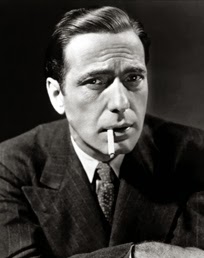
Humphrey Bogart
"Film noir" is a term coined by film critics to describe what was once simply known as "melodrama." The stories, characters, and attitudes of these types of movies can be traced to crime fiction that became popular during the Great Depression, but it wasn’t until the early 1940s that the visual indicators of film noir really took root in Hollywood films.

Over time, critics, new filmmakers, and eventually film fans and general audiences accepted the term “film noir” to encompass a particular style: Shadowy black-and-white photography, cynical characters living on the fringe of society who become enmeshed in a mysterious, dangerous situation, and a general sense of foreboding.

These movies involve private detectives and cops, criminals and lawyers, gangsters and drifters, boxers and other wise guys, nightclub singers and dames in distress, and both rich and poor behaving badly. The ‘hero’ of the picture is usually an ambivalent man, sometimes duped by a duplicitous woman, sometimes saved by a virtuous one. First-person narration is often typical of these melodramas, as a window into the protagonist’s thoughts. There’s a particular cadence and rhythm to film noir.

There are several legendary movies in this genre that you still hear about these days, classics like “The Maltese Falcon” and “The Big Sleep,” both starring Humphrey Bogart, who has become the genre’s filmic representative. But I want to focus on a few—without Bogart and without much current fame—that I believe deserve more attention.

Nocturne (1946)
Up until this past year, I had not even heard of “Nocturne,” so it was a surprise to me. In an opening scene that had me hooked, smarmy, arrogant Hollywood movie composer Keith Vincent is tickling the keys of his piano. On the wall to the right of his piano is a row of photographs of glamorous ladies. He’s speaking in a very condescending manner to an unseen woman, giving her the brush-off. When he returns to his keyboard, a shot rings out, and Vincent slumps over dead.


About the plot
From the looks of it, the police think it was a suicide. But detective lieutenant Joe Warne (played by George Raft) suspects murder. We learn right away that Joe is a bit of a loose cannon; his interest in the case and his manner of investigation is frowned upon by his bosses on the force. But motivated by his stubbornness, he begins interviewing some of the women whose picture hung on the dead composer’s wall, finding that a number of them had their reasons for wanting him dead.


Lynn Bari
In his investigation, Joe meets a bit movie actress by the name of Frances Ransom (played by Lynn Bari). Frances dated Keith Vincent in the past, and her disdain for the man makes her a suspect. Despite her dismissiveness toward Joe, there are sparks between them. Meanwhile, Frances’s sister, a nightclub singer named Carol (played by Virginia Huston), also gets caught up in the investigation. Joe’s violent outbursts at inopportune moments causes him to get suspended from the force, but he continues his investigation, which eventually brings him to the studio of the unctuous photographer who took the women’s portraits.

There is a terrific sequence within the studio where Joe discovers the photographer. Let’s just say he’s not developing photos. This is 40s noir, so we see just his silhouette swinging slowly left to right, with the only sound the creaking of a rope and the wind whistling outside an ominously open door.

About the actors
George Raft was my grandmother’s favorite actor, but he’s not one of mine. His acting could usually best be described as wooden. Now, while a Bogart could play a hard-boiled character but do it with pathos when called for, a crime melodrama like “Nocturne” doesn’t necessarily require a lot of shading, at least not from its actors. That’s why Raft’s stone-faced performance seems to work here. His Joe Warne is a single-minded, hardboiled character not given to demonstrations of emotion. Plain and simple.
George Raft

Lynn Bari is not a name that’s heard much today, if at all, which is a shame. She was a B-list actress who made a lot of routine, forgettable pictures, and a few good ones in a fairly long career. Like many actresses of her generation, she was capable of comedy and drama, and she’s quite compelling and believable as Frances, a woman who’s had her fair share of hard knocks.

About the look and feel
The thing I love best about black-and-white movies of the forties is the way they look, and somehow this sort of melodrama evokes it best. The film creates a specific mood as it moves from one setting to another: Keith Vincent’s sleek apartment; smoke- and music-filled nightclubs; the photographer’s modern studio; Joe’s cozy home (where he lives with his doting mother); Frances’s modest but fashionably appointed apartment; and the more low-rent boardinghouse where her sister, the struggling singer, lives.


Whatever their trappings, the film illustrates that these would-be actresses, nightclub singers, photographers, composers, and musicians are living in a seedier flip-side to what we think of the glamour of Hollywood.

Speaking of place, Lynn Bari’s best scene occurs when she is questioned by Joe at an outdoor swimming pool. Fetching in an iconic 40s swimsuit, she has some snazzy dialogue in a heated stand-off. She also figures prominently in a pivotal scene that was filmed on the set of the movie “Sinbad, the Sailor” that was actually filming on the RKO Studios lot. It’s fun to get a behind-the-scenes look at a real RKO production in the works.

My assessment
Film noir provides a window on a vanished underbelly of American society, and “Nocturne” captures its time, place, and people with subtle punch.


The film was scripted by Jonathan Latimer, and produced by Joan Harrison, who wrote five screenplays for Alfred Hitchcock and produced his television programs in the early '60s. Latimer also wrote the screenplay for our next film, “They Won’t Believe Me,” which Harrison produced as well. (They obviously knew their niche.)

They Won’t Believe Me (1947)
Life magazine ad
Audiences of a certain age who don’t know much about Robert Young’s film career may know him from the 1950s sitcom “Father Knows Best,” the 1970s medical drama “Marcus Welby, M.D.,” or from Sanka coffee commercials in the early '80s.

Throughout his film career, he often portrayed a playboy, a light comic leading man, or romantic counterpart to a popular leading lady before becoming America’s favorite dad. Not often called upon for a heavy dramatic role, he is an unusual choice to portray Larry Ballentine, who is a grade-A heel.

About the plot
The film opens up in a courtroom. It’s a murder trial. The prosecution rests, and Ballentine takes the stand and begins to recount his story in flashback.


Ballentine’s wife is the wealthy Greta, whom he married for money. He meets the dazzling Janice Bell. They begin a relationship that seems to takes place mostly in quiet restaurants or bars in the middle of the day. They fall in love, or as close to love as Larry can get. Eventually Janice realizes she can’t come between Larry and his wife, so she breaks off the relationship and moves to Quebec for a new job.

In the meantime, the seemingly clueless Greta learns about the affair when Larry arranges to take a business trip to Quebec. Greta tries to woo Larry back by buying him a ranch and getting him a partnership in a Los Angeles-based brokerage firm. He takes it and cancels the trip. (Remember, he’s shallow.)

Larry isn’t particularly attentive to his job at the brokerage, and that gets him in trouble with his boss, Trenton. His attention instead veers toward Verna Carlson, a pretty employee who helps him out of a jam. Verna isn’t as demure as Janice was, so she’s more than happy to be seen with the wealthy Larry at a variety of fashionable nightclubs.

Before you know it, Larry is asking Greta for a divorce, wiping out his checking account, and writing a fat check for $25,000 to Verna. He and Verna meet up one night to drive together to Reno. Unfortunately, their travel plans are interrupted when their car is hit by an oncoming truck; Verna is killed, Larry is badly hurt. And the cops think that Verna was Greta.

Susan Hayward
With Verna mistaken for Greta, Larry realizes he can now kill Greta and be rid of her. But his plan is foiled when he returns to the ranch and finds her at the bottom of a cliff near a river, a suicide. Larry climbs down the cliffside and tosses Greta into the river.

With two dead women on his conscience, Larry flees the country and ends up in Jamaica. While there, he runs into Janice, and they travel together back to Los Angeles. Janice has been secretly working with Trenton to investigate the mysterious disappearance of Verna, and tells Larry’s story. The police are summoned, the ranch is searched, and Greta’s body is found. But the cops think it’s the missing Verna. Larry is arrested and thrown in jail for her murder.

Flash back to the courtroom, and the jury is about to reach their verdict. This guy is a heel, he had at least two affairs behind his wife’s back, but is he responsible for either of the two deaths? When Larry is done with his story, will they believe him?

You’ll have to watch for yourself to find out.

About the actors
Robert Young was rarely given a chance to portray an unsympathetic character. He doesn’t have the toughness of, say, George Raft, Humphrey Bogart, or John Garfield (featured in our next film in this post). But that may be why it works here. He’s not playing a cop or a criminal, just a self-centered playboy who gets himself in hot water and doesn’t really know how to deal with it until he has an epiphany of sorts while in jail. Young is always dependably good, whether doing light comedy or serious drama, and this is probably one of his best films because it enabled him to put a spin on his usual nice-guy image.


Susan Hayward has a showy role as Verna, making a tramp sympathetic. Hayward toiled as a contract player from the late ’30s, but she really hit it big with “Smashup: The Story of a Woman” in which she played a nightclub singer who hits the skids. It was made the same year as “They Won’t Believe Me,” and she’d never be a supporting actress again; she went on to become one of the biggest female stars of the 50s, often portraying earthy, larger-than-life gals.

Jane Greer
In retrospect, Jane Greer, as Janice, didn’t have much of a film career, but in the late 40s she co-starred in one of the seminal film noirs, “Out of the Past,” which is not to be missed if you like the genre. (Greer also appears in its 1984 remake, “Against All Odds”). She had a way of playing venal characters with a touch of innocence.

Rita Johnson, as Greta, was a stalwart supporting player who always acquitted herself well, usually playing upper-crust society women, as she does here. Her Greta is written a bit too tolerant of Larry’s philandering, but she capably combines sympathetic and manipulative qualities in her characterization.

My assessment
One thing that stands out about this movie is that Young gets to play opposite three female leads. Unbeknownst to him, they each contribute to his downfall, even if it is his own fault. He marries Greta, cheats on Greta. He has an affair with Janice, loses Janice. He meets Verna, runs off with Verna. Verna dies by accident, Greta kills herself on purpose, Janice rats on Larry. Larry gets himself a murder rap.


It’s all very neatly played out, and the three ladies are terrific. Some may have a hard time buying Young in such an unsympathetic role, but he’s not intending to play tough. If anything, the character of Larry Ballentine is a fop whose philandering puts him into a hole he digs himself. It’s as if one of Young’s playboy characters from his light comedies of the 30s has gotten older, but not at all wiser.

Nobody Lives Forever (1946)
“Nobody Lives Forever” capitalizes on what was happening in the country right after the end of WWII. The flag-waving was over, and soldiers were returning to a very different America. The stunted optimism of many returning soldiers was ripe for stories of disillusionment. And where better to depict that disillusionment but film noir like this one?


John Garfield
About the plot
The film opens with returning soldier Nick Blake (John Garfield) reflecting on his hopes for a new, better life in post-war New York. He wants an upstanding life and marriage to his lounge singer girlfriend, Toni (Faye Emerson), but his dreams are shattered when he realizes that while he was away fighting in the war, she not only got a new boyfriend, but also spent all his money. Nick hightails it to Los Angeles, and gets caught up with two small-time criminals.


The scheme at the center of the story is an attempt to dupe rich widow Gladys Halvorsen (Geraldine Fitzgerald) out of her money. But as often happens in films like this, Nick falls in love with her, which complicates matters. He tries to pay off his fellow gang members to get himself out of the scheme and leave Gladys alone. But when the gang’s leader kidnaps her so he can get a bigger share, it leads to an exciting climax.

About the actors
Garfield, while no longer a household name, has a fascinating body of work that represents the aspirations of the working class man of his times. Whether he was playing an oil rig worker, a musician, a boxer, a soldier, a cop, or a criminal trying to go straight, he always brought a tough-but-tender naturalness to his characters.


Sadly, Garfield suffered a heart attack in 1952, what many believe was the result of the stress caused by being a subject of the Communist witch hunt. Earlier in this post, I mentioned Humphrey Bogart, but John Garfield is certainly one of the top actors identified with film noir/crime melodrama.

Geraldine Fitzgerald
In the late 30s, Geraldine Fitzgerald was a second lead in such classics as “Wuthering Heights” and “Dark Victory.” If Warner Brothers tried to groom her as a leading lady, it didn’t really take hold; one could argue she wanted it that way, for as she got older, she took more and more small yet interesting character parts, often—like Angela Lansbury—playing women much older than she actually was. (For example, some viewers may remember her as Dudley Moore’s hunched, hilariously venal grandmother in “Arthur.”)

My assessment
Garfield’s Nick has a chance at redemption in the end, but the film’s opening illustrates how the optimistic hopes of many a veteran were dashed by a bitter realization that America, and the rest of the world, didn’t change much; and perhaps just got more cynical, more dangerous. Even some of Garfield’s later film titles indicate this disaffection: “Force of Evil,” “We Were Strangers,” “The Breaking Point.”


“Nobody Lives Forever” has rich cinematography, and makes great use of both indoor and outdoor locations. There is a beautifully filmed scene with Garfield and Fitzgerald on the grounds of the Mission San Juan Capistrano; in a long shot, a flock of birds soar up and then down to a courtyard at the feet of the couple. It is lyrical and lovely, and captures the mood of their burgeoning romance.

The screenplay is by W.R. Burnett, who was a novelist and screenwriter who penned a number of other film noir classics. His biography on the Internet Movie Database explains: “[Burnett] portrayed characters who have, for one reason or another, fallen into a life of crime. Once sucked into this life they've been unable to climb out. They get one last shot at salvation but the oppressive system closes in and denies redemption.” That is certainly the case with “Nobody Lives Forever.”

Pitfall (1948)
While male leads in film noir are typically hardened characters in urban settings on one or the other (or sometimes both) side of the law, occasionally a film noir takes place in a suburban setting, turning on its head the idea of suburbia as a clean, innocent place free of treachery. In “Pitfall,” we see glimpses of an idyllic home life for John and Sue Forbes and their young son. Everything seems perfect. Except that it’s not.


Dick Powell
About the plot
Forbes (played by Dick Powell) may have what appears to be a model, middle-class life, but he is frustrated with his predictable existence. He works for an insurance company, and deals daily with its drudgery. When he begins investigating what appears to be the usual embezzlement case, he finds the excitement he has been looking for. And a whole lot more.


As part of the case, Forbes must retrieve gifts that were given to Mona Stevens (Lizabeth Scott), the girlfriend of the embezzler (who is already in jail). But when he meets Mona, it’s clear that Forbes will not approach this case like any other. Forbes has never met anyone as electric as her, and they begin an affair. Meanwhile, Forbes’ conscience nags at him when he’s back home with his humdrum existence with his wife Sue (Jane Wyatt).

Entering the picture to complicate matters and bring a bit of stark violence to Forbes’ idyllic affair is J.B. MacDonald (Raymond Burr), a private detective working for the insurance company. MacDonald also has his eye on Mona, but his advances are unwanted. A jealous MacDonald, knowing that Mona won’t accept his advances, pummels Forbes for getting in his way; it’s a beating that takes place in broad daylight and comes as a surprising burst of violence.

It’s at this time that Mona learns that Forbes is married. To make things even more complicated, Mona’s boyfriend Bill Smiley (Byron Barr) is about to get out of jail. Forbes gets revenge against MacDonald by beating him up, but MacDonald reciprocates by informing the bloodthirsty Smiley about Forbes.

Smiley comes to Forbes’ suburban home, and Forbes shoots him. MacDonald, thinking Forbes is the one who was shot, tries to convince Mona to be with him; but Mona shoots MacDonald instead.

Mona is arrested, and Forbes decides he can’t deal with the pressure of the situation. He admits the affair to Sue, and then admits to the district attorney that he knew Smiley, who wasn’t just an intruder, as he first told the police.

Forbes, a victim of his own circumstance, regrets what he’s done fairly early in the picture and does what he has to do to maintain his family life. But the idyll is shattered; the Forbes’s have been jarred from their American dream.

About the actors
Dick Powell started his career as a crooner in many popular musicals of the 1930s. His image was a lightweight comic actor, but he wanted better roles, and eventually completely changed his image by playing gumshoe Philip Marlow in “Murder, My Sweet” in 1944. Whether playing a grizzled, world-weary private detective or a disillusioned middle-aged man of the middle class, he excelled, with an intensity that is surprising when you remember his dimpled, cherubic face in all those Busby Berkeley musicals. In "Pitfall" he brings to his role a sympathetic desperation.


Jane Wyatt, as Sue Forbes, often played wholesome mother roles, and she is most well remembered today as playing Robert Young’s wife in “Father Knows Best.” In “Pitfall,” she plays Sue much in that mold: She is a good wife and mother, supportive of her husband, and she fits into her suburban setting as neatly as her comfortable furniture.
Lizabeth Scott

Lizabeth Scott, as Mona, is one of the grand dames of film noir. Like Lauren Bacall, Scott has a low, gravelly voice that befits the glamorous but hard women she mostly played. She has a number of film noir classics on her resume, including “Dead Reckoning” (1947), opposite Bogart and “The Strange Loves of Martha Ivers” (1946), opposite Kirk Douglas. As of this writing, Ms. Scott is 92 and still doing personal appearances at film festivals.

My assessment
Quite unusual for 1948, “Pitfall” questions the sustainability of a happy home life in the suburbs. Powell’s Forbes is a restless man who has been shoehorned into strict roles as husband, father, and provider. It’s fascinating to me that it is Dick Powell, the former boy singer, who brings to life the disillusioned Forbes. The film presents a number of conventions of post-war America, from the influence of advertising appealing to the burgeoning middle class to the influence of comic books on American children.


There are interesting similarities between “Pitfall” and “They Won’t Believe Me” in that Dick Powell and Robert Young play rather dull yet discontented men who navigate themselves into dangerous territory and dig themselves in deeper. In both films, an unwitting woman enables them to go down a path that changes their lives forever.

Parallels among these films:
For me, one of the fun things about watching old movies is finding parallels from film to film. Before I started researching and writing this installment, I didn’t realize the many similarities across these four titles:

  • John Latimer wrote the screenplays for “Nocturne” and “They Won’t Believe Me.”
  • Both of those films were produced by Joan Harrison.
  • “They Won’t Believe Me” stars Robert Young; “Pitfall” stars Jane Wyatt. They later co-starred on television as husband and wife on “Father Knows Best.”
  • The director of “Pitfall,” Andre de Toth, was at one time married to Veronica Lake.
  • Veronica Lake starred in the 1942 film noir classic “This Gun for Hire,” whose screenplay was written by W.R. Burnett, who later wrote the screenplay for “Nobody Lives Forever.”
  • Jean Negulesco, who directed “Nobody Lives Forever” directed its star, John Garfield, two more times.
  • W.R. Burnett also wrote the screenplay for “The Racket” in 1951, which co-starred Lizabeth Scott.
  • Lizabeth Scott starred opposite Kirk Douglas in his first movie, the classic film noir “The Strange Love of Martha Ivers” (1946).
  • Jane Greer starred opposite Kirk Douglas in his second movie, the classic film noir “Out of the Past” (1947).
  • Jane Greer has a small part in “Sinbad, the Sailor,” the movie that is filming on the studio back lot in “Nocturne” when George Raft arrests Lynn Bari.
  • Harry J. Wild was the cinematographer on “Nocturne,” “They Won’t Believe Me,” and “Pitfall.”
I’m sure we could find more parallels with a little more investigation. But we’ll leave it at that!

Monday, April 7, 2014

Mickey Rooney: An Appreciation

Mickey Rooney, circa 1940
The career and work of Mickey Rooney, the legendary Hollywood star who died on April 6 at age 93, deserves a closer look. He started at a very early age in his parent’s vaudeville act, so he was hamming it up early in life. He moved on to low-budget 'Mickey Maguire' comedies (I count 55 of them between 1927 and 1934), and even did the voice for the cartoon Oswald the Rabbit (a sort of precursor to Bugs Bunny).

In between, he played roles calling for a cherubic kid, a rascally ragamuffin, or a street-smart scamp, many uncredited. And all this before 1935, when he was cast in a high-profile role as Puck in the film version of Shakespeare’s “A Midsummer Night’s Dream.” That same year saw him appear in an adaptation of Eugene O’Neil’s “Ah, Wilderness.” He played Tommy, the youngest brother in the Miller family. His work was so appealing, he was cast as Andrew Hardy in “A Family Affair.” This small-budget film was such a hit, it started the Andy Hardy series that made Mickey a household name. (It was also a showcase for several young starlets who would go on to bigger things, including Judy Garland, Lana Turner, Donna Reed, and Esther Williams.)

From there, he was one of the most popular young stars in Hollywood, appearing in many MGM comedies, dramas, and musicals from the late 30s through the late 40s.

He had proven himself an agile dancer, a charming singer, a funny comic, and a capable dramatic actor. But by the end of the 1940s, he was pushing 30 and audiences couldn’t really see him as anything but the young, energetic Andy Hardy type, and interest waned. His filmography after about 1948 is dotted with unremarkable titles, but he persevered.

With the advent of television, Mickey continued working in that new medium, alternating appearances in a variety of low-budget pictures throughout the 50s, with the occasional supporting role in a high-profile work.
Mickey and Judy Garland
By the early 60s, he was taking more small parts in big films, including ensemble comedies like “It’s a Mad, Mad, Mad, Mad World,” in which it seemed every major comic star of past and present made an appearance, from Milton Berle to Jack Benny, Sid Caesar to Jonathan Winters. At the same time as this comic fare, he was appearing in gritty dramas like 1962’s “Requiem for a Heavyweight,” arguably Mickey’s last really good role.

For the rest of his life, he worked steadily, appearing in many feature films and television productions throughout the 70s, 80s, and 90s. In between, he appeared in family pictures like “The Magic of Lassie,” “Pete’s Dragon,” both in 1978, and “The Black Stallion” a year later. (The first and third of these kid-friendly movies harkened back to his role as a jockey in the 1944 classic, “National Velvet”—which made Elizabeth Taylor a star.)

True, the quality of his filmography from the late 80s on is spotty at best, but the man never stopped working, all the way up to a brief cameo in 2011’s “The Muppets.” In fact, a look at his filmography shows three films in production for 2014. That’s saying a lot for a man who, born Ninian Joe Yule, Jr. in 1920, went on to be one of the biggest draws in Hollywood’s history and kept at it for nine decades despite many personal ups and downs.

Mickey's Best
Here are a few of the films that I believe encapsulate the Rooney spirit. They represent his comic ability, show off his dramatic skill, and capture his youthful, athletic ebullience.

Boys Town (1938): Spencer Tracy is Father Edward Flanagan, who opens a home for wayward boys on the belief that “there is no such thing as a bad boy.” Mickey, as Whitey Marsh, an arrogant punk, does his best to prove him wrong. Mickey is known to have been a pretty conceited young man in real life, and it’s a trait he leverages to create the character of Whitey. But through the influence of Father Flanagan and the events of the film, Whitey’s character changes, and we know he won’t go down the path of delinquency. Mickey manages to be tough and tender, his manic energy tamped down but still broiling at the surface.

The Adventures of Huckleberry Finn (1939): Seriously, who was better cast to play Huckleberry Finn than Mickey Rooney? Although he was already 19 years old, he was a perfect choice to play a rambunctious kid who embarks on an adventure on the Mississippi with Jim, a runaway slave (played by the towering Rex Ingram). This is a flavorful telling of the classic Mark Twain story, and Mickey is terrific. (BTW, the world needs to know more about Rex Ingram, a seemingly forgotten black actor who has a number of distinguished titles in his filmography.)

Babes in Arms (1939): In his first big musical with Judy Garland (but not their first film together), Mickey and Judy struggle to make a go of it in show biz, with the film culminating in a big Busy Berkeley dance number. The prototype for the ‘let’s put on a show’ storyline imitated ever since, “Babes” encapsulates the youthful energy of Mickey and Judy. She was only 17 years old, and he was just 19, and they represented America’s shining youth. (See also "Strike Up the Band," another musical with Judy and Berkeley, made the following year.)

Girl Crazy (1943): Mickey and Judy teamed again a few years later in this buoyant musical based on the Gershwin stage show. (You just can’t go wrong with the starring talents and music by George and lyrics by Ira.) Mickey plays a spoiled rich kid forced to get away from the girls by going to an all-boy’s college. While there, he falls for the Dean’s granddaughter, played by Judy. Amid the typical superficial but fun complications, they sing, they dance, they fall in love, and everyone has a great time: Especially the audience. This one really shows off the chemistry and talent of Mickey and Judy, honed from their previous musicals.

The Human Comedy (1943): For anyone who only knows Mickey’s energetic persona, this movie will come as a surprise. Based on the William Saroyan novel, Mickey plays Homer Macauley, a messenger boy whose simple life in a small New York town is altered dramatically by the stark realities of World War II. Throughout the course of the film, he sees first-hand the effects of war on families who have lost sons. The film has some excellent dramatic work from Mickey, really showing the depth of his skill at a young age. The rest of the cast is full of good performers who were just starting out, including Van Johnson (as Homer’s brother, who’s preparing to leave for the war) and Donna Reed (his sister). Ray Collins and Fay Bainter are lovely as Homer's parents. Frank Morgan (the Wizard in “The Wizard of Oz”) is touching as Homer’s drunken boss Mr. Grogan. There are a couple subplots to round out the film, giving a really good window on life in a small American town at a turning point in our recent history (and it’s better than the book).

Drive a Crooked Road (1954): In this B-movie, he plays Eddie Shannon, a mechanic with aspirations to be a great racecar driver. He’s living in a small apartment with trophies from past successes to remind him that he’s fallen on hard times. When he meets a pretty dame named Barbara, he falls fast; but her attentions are just a ruse to introduce him to two bank robbers who, after ingratiating themselves to him, convince him to drive the getaway car. It doesn’t go well from there. By this point in Mickey’s career, he was definitely no longer a first-rung star; but he is quite understated, except for several justifiably explosive moments. The film is a neat view into the lives of people living on the edge; and, with so much of the film made on location in California, it captures a particular place (I’m thinking Malibu) in the early fifties. It’s a small, subtle film but it pays off for its uniqueness. (It was written by Blake Edwards, who would later direct some famous comedies, including “Breakfast at Tiffany’s’, in which Mickey has a supporting role—as Audrey Hepburn’s harried Japanese neighbor! Hey, it was 1961.)

The Bridges at Toko Ri (1954): The stars of this Korean wartime picture are William Holden and Grace Kelly, but Mickey has a plum supporting role as Holden’s rescue helicopter pilot pal Mike Forney. He’s a tragic figure in a film—based on James E. Michener's novel and shot in color and on location in the Pacific—that asks hard questions about war. But bear in mind, it’s really not a war movie; rather it’s an examination of characters dealing with war’s ramifications. Mickey does a fine job in a real character part, getting the chance to be funny and touching.

Requiem for a Heavyweight (1962): Anthony Quinn is Louis 'Mountain' Rivera, a boxer at the end of his career. Jackie Gleason is his manager, who has bet it all on Quinn losing a round against none other than Cassius Clay (aka Muhammed Ali). This is a dark movie, about seedy characters; it was written by Rod Serling (“Twilight Zone”), based on his original television script, improved by a feature film budget and execution. Don’t be put off if you’re not a boxing fan; this is a character study of the first order, and everyone give stellar performances. (People seem to forget that Jackie Gleason was a very solid dramatic actor in the early 60s, because all they remember is “The Honeymooners” from the prior decade. Same can be said for Mickey: He plays Army, Mountain's trainer, and it's one of his best dramatic performances.)

Here's a typically sweet tribute to Mickey from Turner Classic Movies.

Side note: I don't recommend "Midsummer Night's Dream" (1935). It has gorgeous cinematography and some good moments, but Mickey as Puck is just too irritating for words. Granted, he was only 15 years old, so I blame the directors. Also, avoid one of the few films that Mickey directed, "The Private Lives of Adam and Eve" (1960), at all costs. He plays The Devil; it's not entertaining even on a camp level, just lousy.